

If you want to understand something, you can read about it.
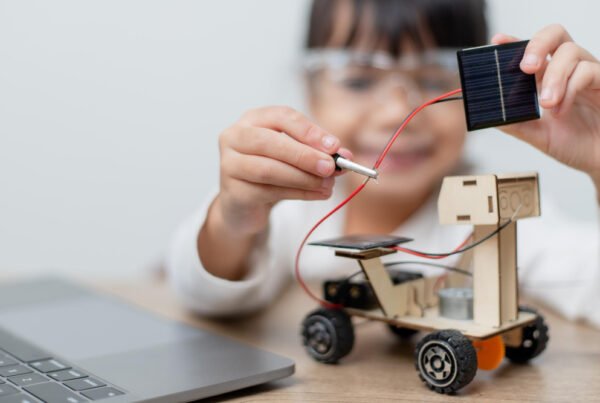
If you want to really learn it, you make something with your hands.
That’s not a slogan. It’s how learning sticks.
For kids, teens, and even adults, building, designing, and creating turn abstract ideas into real understanding. Here’s why learning by making works better—and why it matters more than ever.
1. Making forces you to understand, not memorize
When students make something, shortcuts disappear.
You can memorize a definition and forget it tomorrow.
You can’t build something without understanding how the parts fit together.
Making requires:
-
comprehension
-
application
-
adjustment
That’s real learning.
2. Mistakes become information, not failure
In traditional learning, mistakes often mean points lost.
When you’re making something, mistakes mean:
-
something didn’t work
-
you need to change an approach
-
you learned what not to do
That shift changes how students relate to failure. They stop avoiding it—and start using it.
3. Learning becomes active instead of passive
Listening is passive. Watching is passive.
Making is active.
Active learning:
-
engages attention longer
-
improves retention
-
increases motivation
Students remember what they build because they did something with the knowledge.
4. Making reveals gaps immediately
You don’t always know what you don’t understand—until you try to use it.
When students make things, gaps show up fast:
-
measurements don’t line up
-
ideas don’t translate
-
plans fall apart
That’s not a problem. It’s feedback.
5. It teaches problem-solving in real conditions
Real problems don’t come with answer keys.
Making teaches students to:
-
define the problem
-
test solutions
-
adjust based on results
This kind of thinking transfers directly to real life and future work.
6. Finishing something builds confidence
Starting is easy. Finishing is hard.
When students complete a project, they learn:
-
how to push through frustration
-
how to decide when something is “done”
-
how effort turns into results
Confidence built this way is earned—and durable.
7. Making connects ideas across subjects
Making naturally blends:
-
math (measurement, scale, timing)
-
science (cause and effect, materials)
-
language (explaining decisions)
-
creativity (design choices)
Learning stops being siloed and starts feeling connected.
8. It builds patience and focus
Making takes time.
Students learn:
-
how to slow down
-
how to work step by step
-
how rushing creates more problems
These habits are hard to teach directly—but making teaches them naturally.
9. Students see the purpose of learning
Abstract lessons often feel disconnected from real life.
When students make things:
-
learning has a visible outcome
-
effort leads to something tangible
-
knowledge feels useful
Purpose increases engagement—and persistence.
10. It prepares students for real-world expectations
The world rewards people who can:
-
figure things out
-
adapt when plans change
-
learn new tools quickly
Making develops all of that.
It teaches students how to learn—not just what to learn.
11. It works for different kinds of learners
Not every student thrives in lecture-based environments.
Making gives students:
-
alternative ways to show understanding
-
room to think spatially and practically
-
chances to succeed outside traditional formats
This isn’t lowering standards. It’s widening access to learning.
12. Making turns curiosity into skill
Curiosity is natural. Skill is built.
Making bridges that gap:
-
curiosity leads to trying
-
trying leads to learning
-
learning leads to confidence
That cycle is how lifelong learners are formed.
When making is missing from learning
Without opportunities to make, students may:
-
fear mistakes
-
avoid uncertainty
-
rely too heavily on instructions
Those aren’t character flaws. They’re experience gaps.
At SchoolCentric, we believe learning should include making—because that’s where understanding deepens and confidence grows.
Final takeaway
You can study something and forget it.
You can memorize something and misunderstand it.
But when you make something, learning sticks.
That’s not because making is fun—though it often is.
It’s because making demands understanding.
👉 If you want your child to learn deeply, confidently, and practically, SchoolCentric helps integrate hands-on learning that turns knowledge into real capability.